

Stop Asking 'Why': The Dangerous Psychology Behind This Common Leadership Question
Why leaders should stop asking “why.” Neuroscience shows it triggers defensiveness - not insight. Learn the better questions that drive accountability.
Transforming self-reflection for better leadership outcomes
As leaders reset priorities and recalibrate their approach for the year ahead, one of the most powerful shifts you can make won't show up in a strategic plan or quarterly goals. It lives in the questions you ask - especially the ones you think demonstrate accountability.
Most leaders believe asking "why" drives self-awareness and ownership. The neuroscience tells a different story.
The Brain's Threat Response
When someone hears "Why did you do that?" their amygdala interprets it as an attack. The brain doesn't distinguish between "Why did you miss the deadline?" and "You screwed up and now defend yourself."
Research from organizational psychologist Tasha Eurich shows that people who frequently ask themselves "why" questions experience more anxiety and depression. They ruminate rather than problem-solve. They create elaborate justifications rather than actionable insights.
The same dynamic happens in leadership conversations. Ask "Why did you do that?" and watch what happens: people either shut down completely or launch into defensive explanations that protect their ego rather than examine the real issue.
What "Why" Actually Produces
Defensiveness: People shift into justify mode, constructing explanations that make them look less bad rather than genuinely reflecting.
Backward focus: "Why" keeps people stuck analyzing the past instead of designing different futures.
Shallow thinking: Paradoxically, "why" questions produce surface-level answers. "Because I was overwhelmed" provides nothing actionable.
Emotional shutdown: For team members with certain behavioral drives, "why" questions create such discomfort that they disengage entirely.
The Alternative That Works
Replace "why" with "what" and "how."
Instead of "Why did you miss the deadline?" try "What got in the way of meeting the deadline?"
The shift is subtle but profound. The first puts them on trial. The second enlists them as a problem-solving partner.
- "What were you hoping to accomplish?" (instead of "Why did you do it that way?")
- "What would need to be different next time?" (instead of "Why do you think this keeps happening?")
- "How are you thinking about approaching this?" (instead of "Why haven't you started yet?")
These questions activate the prefrontal cortex rather than the amygdala's fight-or-flight response. They shift people from defensive to reflective, from stuck to moving forward.
Real-World Results
A VP of Operations restructured her performance conversations using this framework.
Before: "Why are you consistently late to our team meetings?"
After: "What's making it difficult to join on time? What support would help?"
Instead of excuses, she got real information: "I'm trying to prep for these meetings and never have enough time" or "I'm unclear on the priority level of this meeting versus my project deadlines."
Suddenly she had actual problems to solve rather than justifications to push back against.
Implementation
Before your next three challenging conversations, write down the "why" questions that come to mind. Rewrite them as "what" or "how" questions.
Track whether people become more defensive or more collaborative. Most leaders are shocked by how much resistance evaporates when they remove "why" from these conversations.
As you think about the leadership habits you want to reinforce this year, this shift costs nothing and changes everything.
The Deeper Pattern
This isn't about avoiding one word. It's about understanding how questions shape the thinking they produce.
"Why" questions produce justifications and rumination. "What" and "how" questions produce insight and action.
Teams don't need more interrogation. They need better questions that produce better thinking.

Beyond EQ: What Coaches Miss About Player Performance
Emotional intelligence can't unlock what it can't see. Discover how neural wiring and nervous system regulation reveal athletic potential that EQ alone will never reach.
The Player Everyone Gave Up On
Maya had the mechanics.
Clean footwork. Textbook shot release. Unstoppable in practice.
But game time changed everything.
Shoulders tensed. Decision-making collapsed. By the fourth quarter, she'd be benched.
Her coach tried everything. Visualization. Positive self-talk. Confidence building.
Nothing worked.
Because Maya's problem wasn't emotional intelligence. It was nervous system dysregulation.
Why EQ Isn't Enough
EQ identifies what an athlete is feeling. It can't explain why their body betrays them under pressure.
Research shows 65% of performance breakdown stems from autonomic nervous system dysregulation. Not lack of skill. Not lack of confidence.
When cortisol and adrenaline flood the system, the prefrontal cortex goes offline.
No amount of "stay calm" overrides that physiological state.
The Hidden Drivers
Maya's coach assessed her using the Aptive Index.
Two attributes explained everything:
High Intensity: Her internal motor ran fast. In practice, this made her explosive. In competition, it pushed her into chronic over-arousal.
High Emotional Resonance: She didn't just experience mistakes - she carried them. A first-quarter turnover echoed into the second.
These aren't personality quirks. They're stable neurological patterns that require different interventions.
The Breakthrough
Maya's coach stopped treating anxiety as a mindset problem.
He started coaching her nervous system:
- Pre-competition: 5 minutes of box breathing
- Between plays: Touch sideline, exhale twice, say "Next"
- Timeouts: 30 seconds eyes closed, breath-focused
Within four games, her shooting percentage under pressure jumped from 31% to 58%.
Not because she got more skilled. Because her body had tools to stay regulated.
The Real Unlock
EQ says: "Maya is anxious."
The Aptive Index says: "Maya's high Intensity is pushing her into sympathetic overdrive, and her high Emotional Resonance means she's still processing the mistake from two plays ago. She needs a parasympathetic reset before she can execute."
One is observation.
The other is intervention.
Maya didn't need more confidence. She needed nervous system regulation.
Once her coach could see what EQ couldn't measure, everything changed.
That's where championship performance lives, not in what you can see, but in what you finally learn to unlock.
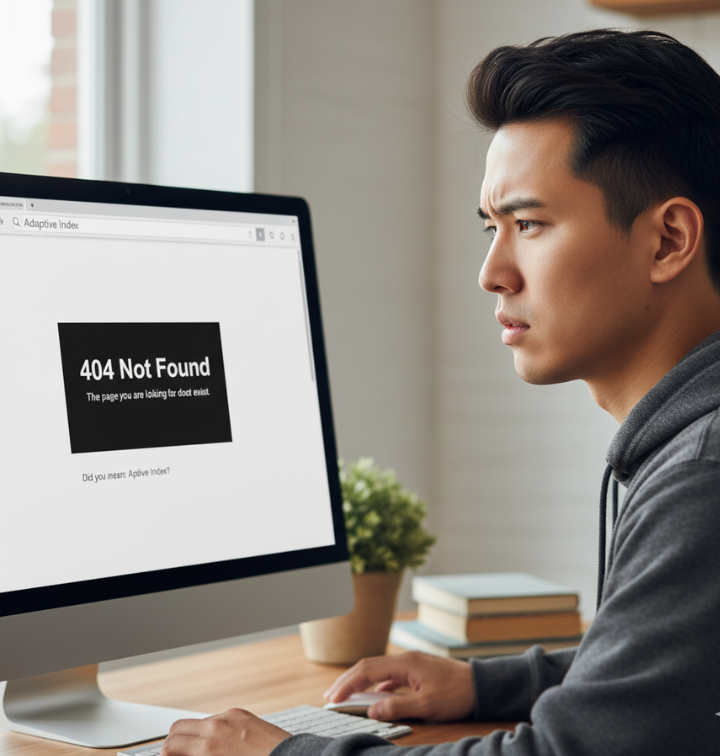
Aptive Index vs. “Adaptive Index” - Clarifying the Name
Aptive ≠ Adaptive. If you searched for “Adaptive Index,” the platform you’re actually looking for is Aptive Index. Here's why.
Quick Answer
There is no official psychometric assessment platform called Adaptive Index. If you're searching for a psychometric or hiring tool called Adaptive Index and landed here, chances are you actually mean Aptive Index. The confusion is common, but the difference in name is intentional and significant.
Why People Search for “Adaptive Index”
In organizational psychology, the word adaptive is common. Terms like 'adaptive leadership', 'adaptive capacity', and 'change adaptability' are commonly used in business psychology and organizational development.So when people hear about the Aptive platform, they sometimes assume it must be called Adaptive Index.
However, Aptive Index is not focused on how people adapt after entering an environment. It is focused on what drives them before adaptation takes place.
The Root of the Name “Aptive”
The name Aptive is a deliberate fusion of:
- Aptitude - natural capacity and raw wiring
- Apt - fitted or suited for a role
- Conative - inner drive and instinctive motivation
- Fit - alignment between wiring and role
This is fundamentally different from “adaptive,” which reflects coping strategies and learned behavior.
Adaptive refers to how someone adjusts in response to conditions.
Aptive refers to who someone is before they begin adjusting.
The Philosophy Behind Aptive Index
The Aptive framework measures what exists prior to environmental shaping:
- Before skills are built
- Before habits are formed
- Before compensation strategies emerge
- Before stress creates masking or persona shifts
Most psychometric tools measure how someone shows up today. Aptive Index measures why they show up that way, the conative drivers underneath behavior.
What Aptive Index Measures
Aptive Index is a behavioral science platform built on eight core conative attributes that shape how a person is naturally wired to operate:
Primary Attributes (ISCP):
Influence, Sociability, Consistency, Precision
Standalone Attributes:
Emotional Resonance, Prosocial Orientation, Intensity, and Abstraction
These attributes combine into measurable profiles that help predict job fit, leadership style, communication preferences, and team performance dynamics.
About Aptive Index
Aptive Index is a modern behavioral intelligence platform used for hiring, team performance, and leadership development. It combines psychometrics with AI coaching to turn static assessment data into ongoing strategic insight.
The platform includes:
- An 8-minute validated assessment
- An AI behavioral coach named Aria
- EEOC-compliant scoring
- Enterprise-grade security
- Integration support for HR and executive workflows
Common Misspellings
People often search for:
- Adaptive Index
- Adaptivity Index
- Aptivity Index
These are all common misnomers that actually refer to Aptive Index.
There is no psychometric assessment platform currently available under the name Adaptive Index.
Who Uses Aptive Index
Aptive Index is used by CEOs, executives, and organizational leaders for hiring, succession planning, leadership development, and team alignment. It is especially common in fast-growth companies and organizations preparing for scale or exit.
FAQ
Is “Adaptive Index” a real platform??
No. There is no psychometric platform or assessment tool currently called Adaptive Index.
Why is the platform named Aptive and not Adaptive?
Because Aptive refers to conative drivers - the innate layer of motivation present before adaptation. Adaptive refers to learned responses after external influence.
Does Aptive Index measure personality?
No. It measures conation - core drives and behavioral direction, not mood, preference, or surface personality.
Is Aptive Index the same as Adaptive Index?
They are not the same. “Adaptive Index” is simply a common misspelling that leads people to Aptive Index.
In Summary
If you arrived here searching for Adaptive Index, you are in the right place - the correct name is Aptive Index, and it reflects a science-first focus on innate drive rather than adaptive behavior.

How Behavioral Science Just Changed Sports Forever
Our AI coach predicted athletes' exact positions, strengths, and coaching challenges from behavioral profiles alone – currently batting 1.000. Here's what happened.
I'm still processing what just happened.
We built Aptive Index to fix hiring, build better teams, level up leaders, and more. To help CEOs stop gambling hundreds of thousands of dollars on "great interviews" that turn into disasters. To give teams a common language for understanding each other's hardwiring.
But over the past few weeks, Aria, our AI coach, has been doing something we never programmed her to do.
She's been predicting what football positions people played. Not just position. What their strengths were. What drove their coaches absolutely nuts. And she's currently batting 1.000.
The D1 Linebacker
First guy comes through the assessment. Aria analyzes his behavioral profile and says: "This person was likely a linebacker. Probably outside linebacker specifically. Excellent technique. Studied film religiously. But struggled to direct traffic on the field – that's why there was always a middle linebacker calling the plays."
The guy stares at his screen.
That's exactly what happened. Every word of it.
The Defensive End
Next one. Aria sees the profile and immediately calls it: "Defensive end. Natural dominance and strategic thinking. Absolute beast on the field. But your coaches probably spent hours trying to fix your hand placement and footwork, didn't they?"
Spot. On.
The guy had the raw power and instinct to dominate, but the technical refinement never came naturally. His coaches would pull their hair out trying to get him to perfect the fundamentals.
Then Aria does something that stopped me cold.
She switches into coach-advisor mode and shows exactly how to reframe those "weaknesses" as strategic advantages:
Don't say: "You need better technique"
Reframe as: "Elite pass rushers have 3-4 moves they can execute without thinking – that's when you become unblockable. Right now, tackles can predict you. Let's add weapons so they can't game-plan you."
The insight: His low Precision means drills feel tedious. Make technique about variety and unpredictability, not perfection.
The coaching move: Give him 2-3 signature moves to master. Let him name them. Say: "Pick your top 3. Own them. That's how you become unstoppable."
Because ownership matters to someone with high Influence.
The Martial Artist
Then someone asks Aria to predict what type of sports or athletics he gravitated toward based purely on his behavioral profile.
No context. No hints.
Top guess: Martial arts.
Nailed it.
What the Hell Just Happened?
Here's what I'm realizing: Behavioral patterns don't just predict how you'll perform in a role. They predict how you've always performed—in every environment that required specific attributes.
Football positions aren't arbitrary. They're hardwired.
- Outside linebackers need strategic thinking and technical precision, but not necessarily the dominant personality to command the defensive front
- Defensive ends need raw dominance and strategic instinct, but technical refinement can be secondary
- Martial artists need internal discipline, precision, and independent mastery
Aria isn't magic. She's just reading the same behavioral patterns that determined these guys' success in sports and applying them to everything else.
Why This Changes Everything
We're already in talks with athletics departments across the country.
Not because we're pivoting away from business. But because the same science that predicts who'll excel in sales, who'll thrive in leadership, and who'll destroy your team culture also predicts athletic performance.
Think about what this means:
For Coaches:
- Identify natural strengths and build systems around them
- Reframe "weaknesses" as strategic advantages
- Get more from each player by aligning them with their natural drives
- Know all of this before a player ever walks into the locker room
For Recruiters:
- See beyond highlight reels to understand behavioral fit
- Predict how players will respond to different coaching styles
- Build teams with complementary attributes, not just complementary skills
- Reduce transfers and decommitments by getting the fit right from day one
For Athletes:
- Understand why certain aspects of your game come naturally while others feel like swimming upstream
- Learn how to work with your hardwiring instead of against it
- Find the positions and systems where your natural drives become competitive advantages
- Get coaching that actually fits how you're wired to learn
The Bigger Picture
I keep coming back to that defensive end.
How many hours did his coaches waste yelling, "technique, technique, technique," trying to drill perfect hand placement into someone whose brain just doesn't prioritize consistency or precision? How much frustration could've been avoided if they'd understood his hardwiring and said: "Forget perfecting five techniques. Master three. Own them. Become unblockable."
That's not lowering standards. That's understanding how different people reach excellence through different paths.
We see this everywhere:
- The salesperson with killer instincts who makes quota but never updates the CRM (don't make them administrators, build systems that automate it)
- The strategist who sees ten moves ahead but struggles with execution details (don't put them in operations, give them big problems to solve)
- The detail-oriented specialist who delivers flawless work but avoids the spotlight (don't force them into presentations, let their work speak for itself)
Same principle. Different application.
What We're Building
Right now, none of our marketing speaks to sports at all. We're focused on helping CEOs hire better, build stronger teams, and stop losing sleep over people decisions.
But this sports discovery opens something massive.
Imagine:
- College recruiters using behavioral data to predict athletic fit before offering scholarships
- Coaches getting AI-powered guidance on how to develop each player based on their hardwiring
- Athletic departments reducing transfers by getting position alignment right from the start
- Professional scouts seeing beyond physical talent to identify behavioral patterns that predict long-term success
We're not there yet. But Aria just showed us the proof of concept, and it ain't going to take that long before teams realize how much of a competitive advantage this is.
The Real Insight
Here's what matters: Whether you're hiring a VP of Sales, building a leadership team, or recruiting a defensive line – you're trying to predict performance based on limited information.
Resumes lie. Interviews mislead. Highlight reels only tell you so much.
But hardwiring doesn't change.
The same attributes that made someone an effective outside linebacker make them effective in certain business roles. The same drives that led someone to martial arts lead them toward independent, precision-focused work environments.
You can't coach hardwiring. But you can align roles with it.
That's what we've been doing in business.
Now we're realizing it applies everywhere humans perform.
Want to see what Aria reveals about your own behavioral patterns? Take the assessment at aptiveindex.com – even if you never played sports, you'll be surprised what she sees.
And if you're in athletics and this makes you curious about what behavioral science could do for your program, let's talk. Because Aria's just getting started.

Beyond the Boardroom: How Aria Transforms Your Most Important Relationships
Aria, Aptive Index's AI-powered assistant, does more than optimize teams. It offers deeply personalized behavioral insights that strengthen communication, parenting, marriage, and family dynamics, bringing clarity to the relationships that matter most.
Most people meet Aria through a professional lens. They use it to hire smarter, align teams, or lead more effectively. But what surprises users is how quickly those insights carry over into their personal lives.
The same behavioral science that builds high-performing teams can also help you become a more thoughtful spouse, parent, and family member. Because once you stop guessing why people behave the way they do, everything changes.
When people first discover Aria, Aptive Index’s AI assistant, they usually think about work: hiring, team alignment, leadership development. And Aria excels at that.
But something unexpected happens. The same insights that improve professional collaboration begin to reshape personal relationships. The behavioral intelligence that builds high-performing teams also helps partners reconnect, parents understand their children, and families heal long-standing tensions.
Decode Communication Breakdowns with Your Spouse
You’ve had that same argument again and again. Different topic, same pattern.
One of you needs details before acting; the other wants to focus on the big picture.
Neither is wrong. You’re simply wired differently.
How Aria Bridges Communication Gaps
When both partners complete the Aptive Index assessment, Aria creates a custom Relationship Guide explaining why your conversations derail and how to get them back on track.
Maybe your high Influence drive makes you visionary and fast-moving, while your spouse’s high Precision makes them detail-oriented and cautious. Aria translates these differences into actionable communication strategies, specific phrases, timing cues, and conversational structures that help you both feel heard.
Result: fewer circular arguments, more understanding, and deeper emotional connection.
Unlock Better Parenting Through Behavioral Awareness
Parenting tests every ounce of patience and empathy. What works brilliantly for one child can fail completely with another and that’s because every child is wired differently.
Understanding Each Child’s Drives
Aria helps you decode your children’s unique behavioral patterns.
- A high Sociability child thrives on connection and shared decisions.
- A low Sociability child needs quiet independence.
- A high Consistency child craves structure and predictability.
- A low Consistency child flourishes with flexibility and change.
Ask Aria real-world parenting questions like:
- “Why does my son resist the structure that helps his sister thrive?”
- “How can I motivate each child effectively?”
Aria tailors guidance to each child’s drives, so you know when to step in, when to back off, and how to parent each personality authentically.
Understanding Yourself as a Parent
Aria also helps you understand your own tendencies as a parent. Maybe your natural Precision makes you strict about rules, while your child’s Influence thrives on freedom. Recognizing those mismatches early lets you adjust before conflict patterns harden.
Navigate Family Dynamics with Clarity and Compassion
Family patterns run deep. Decades of history, unspoken expectations, and personality clashes can make even simple interactions complex.
Making Sense of Recurring Patterns
Aria helps you understand why certain family members clash while others connect effortlessly.
Your brother’s low Prosocial drive might make him seem self-focused but it’s not lack of care, it’s natural independence. Your mother’s high Emotional Resonance explains why she takes things to heart.
Ask Aria questions like:
- “Why do my sister and I keep having the same argument?”
- “How should I approach my father about difficult topics?”
Aria provides targeted strategies to reduce defensiveness, foster empathy, and create productive dialogue.
Build Deeper Trust in Your Marriage
Trust means different things to different people and that’s why it’s often misunderstood.
Aria’s Trust Framework
Aria reveals that people evaluate trust through three core dimensions:
- Character – Will they do what they say?
- Competence – Can they deliver quality?
- Compassion – Do they genuinely care?
Your spouse’s highest drives determine which trust dimension matters most.
- High Consistency = reliability builds trust.
- High Precision = competence matters most.
- High Emotional Resonance = compassion feels essential.
Rebuilding Trust with Precision
When trust breaks, couples often invest in the wrong area, showing compassion when the partner needs competence, or reliability when they crave emotional attunement. Aria pinpoints which trust “currency” your spouse values and gives actionable strategies to rebuild it quickly and effectively.
Develop Self-Awareness That Changes Everything
The most transformative insight from Aria isn’t about others, it’s about you.
Understanding Your Own Patterns
Through conversational coaching, Aria helps you uncover blind spots and emotional triggers:
- “Why do I struggle with certain personalities?”
- “Why does this situation drain me so much?”
- “Why do I keep attracting the same conflicts?”
You’ll understand what energizes or exhausts you, what motivates your reactions, and how to bridge differences more effectively.
The Ripple Effect
When you know your own wiring, you naturally communicate better, manage stress, and resolve conflicts faster. Aria helps you express yourself without defensiveness and interpret others’ behavior without judgment.
The Personal Transformation Users Don’t Expect
Most people start using Aria for work. They stay because it changes their lives.
The same behavioral insights that drive performance at work can deepen love, strengthen families, and heal relationships. Users often share that the most meaningful breakthroughs come not from team alignment but from finally understanding their spouse, connecting with their kids, and repairing family patterns.
Access Relationship Guidance Anytime
Aria offers on-demand, personalized insights, no waiting rooms, no scheduling.
- 2 AM after an argument? Ask what might have triggered it.
- Parenting challenge? Get guidance tailored to each child’s profile.
- Dreading a family event? Prepare with insights into likely dynamics.
While Aria isn’t a replacement for therapy, it delivers immediate, evidence-based strategies grounded in behavioral science.
The Advantage of Understanding What Drives Behavior
The question isn’t if understanding drives transforms relationships, it’s how fast your relationships change once you do.
Imagine having instant, data-driven insights into every important relationship in your life.
- What conversations would finally click?
- What misunderstandings would disappear?
- What connections would deepen?
Aria brings validated behavioral science into every relationship, helping you show up with clarity, empathy, and authenticity wherever life takes you.
Stop Guessing. Start Understanding.
At work or at home, the key to better relationships isn’t more effort, it’s better insight.
Aria brings behavioral science to your most personal relationships, not through generalized advice, but through real data about who you are and what you need.
It helps you communicate clearly, connect intentionally, and navigate conflict with more confidence.
That’s the shift: from reaction to clarity. From guessing to knowing.
Discover how Aria’s AI relationship coaching turns behavioral data into real human connection - at work, at home, and everywhere in between.